Notes
Short pieces about the methodology and architecture decisions behind the AI systems I ship — specs, evals, multi-agent orchestration, LLM integration, and the discipline of directing coding agents.
June 15, 2026
It wasn't the model. It was your data.
Most AI projects fail — MIT found 95% of generative-AI pilots delivered no measurable profit, and RAND put the overall failure rate around 80%. When it goes wrong, the instinct is to blame the model: not smart enough, wrong choice, bad prompts. The data says otherwise. The single most-cited cause of failure is poor data quality, and only about 12% of organizations have data clean enough to support AI at all. You probably don't have a model problem. You have a data problem wearing a model problem's clothes. Here's how to tell.
- architecture
- methodology
June 15, 2026
Resolved — but they wanted a human
Companies love the number: our AI resolves 76% of support tickets on its own. Customers are telling a different story. Across 2026, the share of people who'd rather talk to a real person rose to 85%, frustration with AI agents climbed to 59%, and more than half will abandon even a solved AI-only chat if the path to a human feels blocked. 'Resolved by the bot' and 'happy customer' are not the same thing. Here's the metric you're probably missing, and how to stop optimizing your way into a backlash.
- business
- methodology
June 15, 2026
Spending up, confidence down
Companies are pouring money into AI — budgets up sharply, some doubling year over year. And in the same breath, 51% of CIOs say adoption is already moving too fast for them to manage. That's a strange combination: the people writing the checks think the thing they're funding is outrunning them. The reflex is to read that as 'slow down.' The data says the opposite. The teams that move fastest aren't the cautious ones — they're the ones who built the guardrails first. Here's the real lesson hiding in the contradiction.
- business
- methodology
June 15, 2026
The $3.6 billion support agent
Salesforce already sells Agentforce — a platform to build your own AI agents. On June 15 it spent $3.6 billion to buy a finished one instead. Fin, the support agent formerly known as Intercom, resolves 76% of customer tickets end to end on its own purpose-built model. The company best positioned to build this decided buying a proven, packaged agent was worth $3.6 billion more than waiting to build it. That's the clearest build-versus-buy signal you'll get this year. Here's what it actually means for the rest of us.
- business
- agents
June 15, 2026
The app that burned $15 million a day
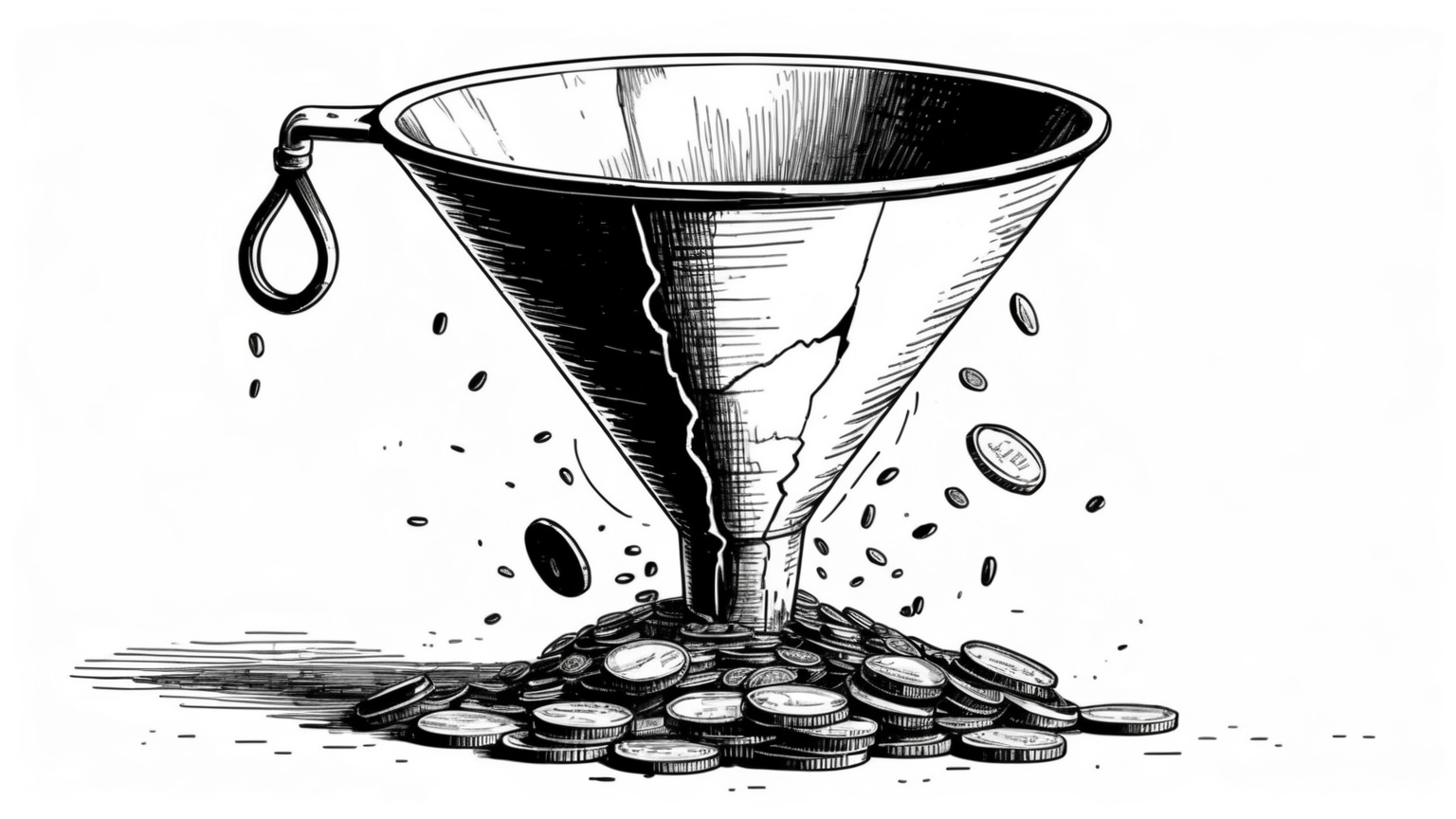
OpenAI built the most hyped AI video app in history, then quietly killed it six months later. Sora was reportedly burning around $15 million a day in compute while taking in about $2.1 million in total — not per day, total. People loved it and it still lost money on every single clip. That's the lesson traditional software never taught us: a generative feature has a real cost every time someone uses it, and 'viral' doesn't fix 'loses money per use.' Here's how to check your own AI feature before it does the same thing.
- business
- ai-native
June 15, 2026
The boring AI win is paperwork
The NHS just signed a £120 million deal to give 505,000 staff an AI assistant. Not to diagnose disease — to do paperwork. In trials, the average person saved 43 minutes a day, and one ward cut its backlog of discharge letters by 62% in a month. That's the AI story nobody puts in a keynote: the durable, deployable value is usually the dull, high-volume admin work, not the dazzling demo. Here's why the boring use case is the one that actually pays, and why you should hunt for yours.
- business
- methodology