Notes
Short pieces about the methodology and architecture decisions behind the AI systems I ship — specs, evals, multi-agent orchestration, LLM integration, and the discipline of directing coding agents.

June 14, 2026
Now your AI content has to say it's AI
On June 10, 2026, the European Commission published its Code of Practice on marking and labelling AI-generated content — the practical playbook for transparency rules that become enforceable under the EU AI Act on August 2. Deepfakes and AI-written text on matters of public interest must be clearly labelled, and people must be told when they're talking to a chatbot. The Code is voluntary; the obligation behind it isn't. Disclosure is becoming the default, and that's not just a compliance chore — it's a trust decision. Here's what it means for anyone shipping AI content.
- business
- security

June 13, 2026
Agents are becoming a feature, not a product
Gartner expects 40% of enterprise applications to embed task-specific AI agents by the end of 2026, up from under 5% a year ago. Agentic AI is the fastest-growing enterprise priority, up 31.5% year over year. Read together, those numbers say something uncomfortable for a lot of startups: the agent is turning into a feature inside the software people already use, not a standalone product they switch to. If 'we built an agent that does X' is your whole pitch, the app that owns X is about to build it too. Here's what that means for what you build.
- business
- ai-native

June 13, 2026
Reach for the small model first
The reflex is to send every task to the biggest, smartest model. The numbers say that's usually the wrong default. A 7-billion-parameter small model runs 10–30× cheaper than a 70–175B one, Microsoft's Phi matches GPT-3.5-class quality at 98% less compute, and over two billion phones already run capable models locally with no cloud at all. Gartner expects task-specific small models to be used three times more than general LLMs by 2027. Here's why 'small first' is becoming the smart default — and when to still reach for the big one.
- ai-native
- business
June 13, 2026
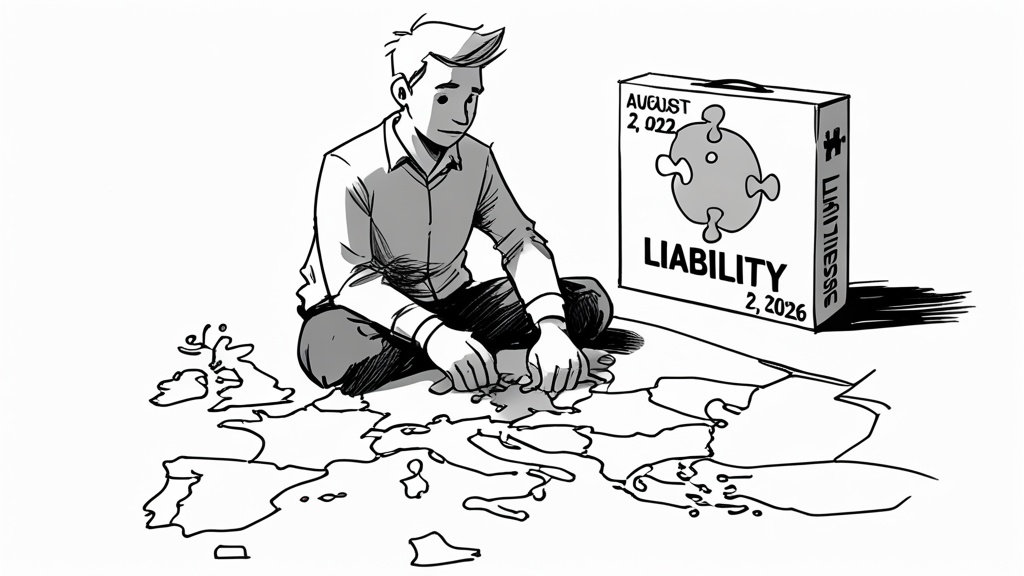
The AI Act's real deadline is August
On August 2, 2026, the EU AI Act's obligations for high-risk AI systems take effect — the part with real teeth: documentation, oversight, risk management, and fines up to €35M or 7% of global turnover. Two things make this messy. As of March, only 8 of 27 member states had even set up their enforcement contact point. And nobody has a clean answer for who's liable when an autonomous agent acts on its own. If your software touches EU users, here's what's actually changing and the gap you need to close.
- business
- security

June 13, 2026
2026 is the show-me-the-money year for AI
Global AI spending is forecast at $2.59 trillion this year, up 47% — and a widely-cited MIT study found 95% of enterprise generative-AI pilots delivered no measurable ROI. Those two numbers can't coexist forever. A Menlo Ventures partner called 2026 the 'show me the money' year, and companies are swapping open-ended budgets for spending caps, dashboards, and ROI gates. If you build with AI, the era of 'we're experimenting' as a free pass is ending. Here's what the reckoning actually changes — and how to be on the right side of it.
- business

June 12, 2026
ChatGPT is no longer the default
A year ago, 'AI' basically meant ChatGPT — it had about three-quarters of all chatbot traffic and the model layer was a near-monopoly. As of June 2026 it's down to 54.7%, Gemini has surged to 27.4% (up about 104% in six months), and Claude, Grok and a long tail split the rest. The monoculture is over, and that changes how you should pick — and how you should build. The 'best AI' is now a per-task question, and betting your product on a single provider just got riskier.
- ai-native
- business