BUSINESS · June 7, 2026
“The AI did it” is the new way to dodge the blame
AI was named in roughly one in four US job cuts this spring, and even Sam Altman admits companies are blaming AI 'whether or not it really is about AI.' Analysts have a name for it: AI-washing. But the same move is quietly spreading into how we run agents — when something goes wrong, 'the agent decided' becomes the place responsibility goes to die. The machine can't hold accountability. A human always does. Here's why that matters more as you hand agents real decisions.
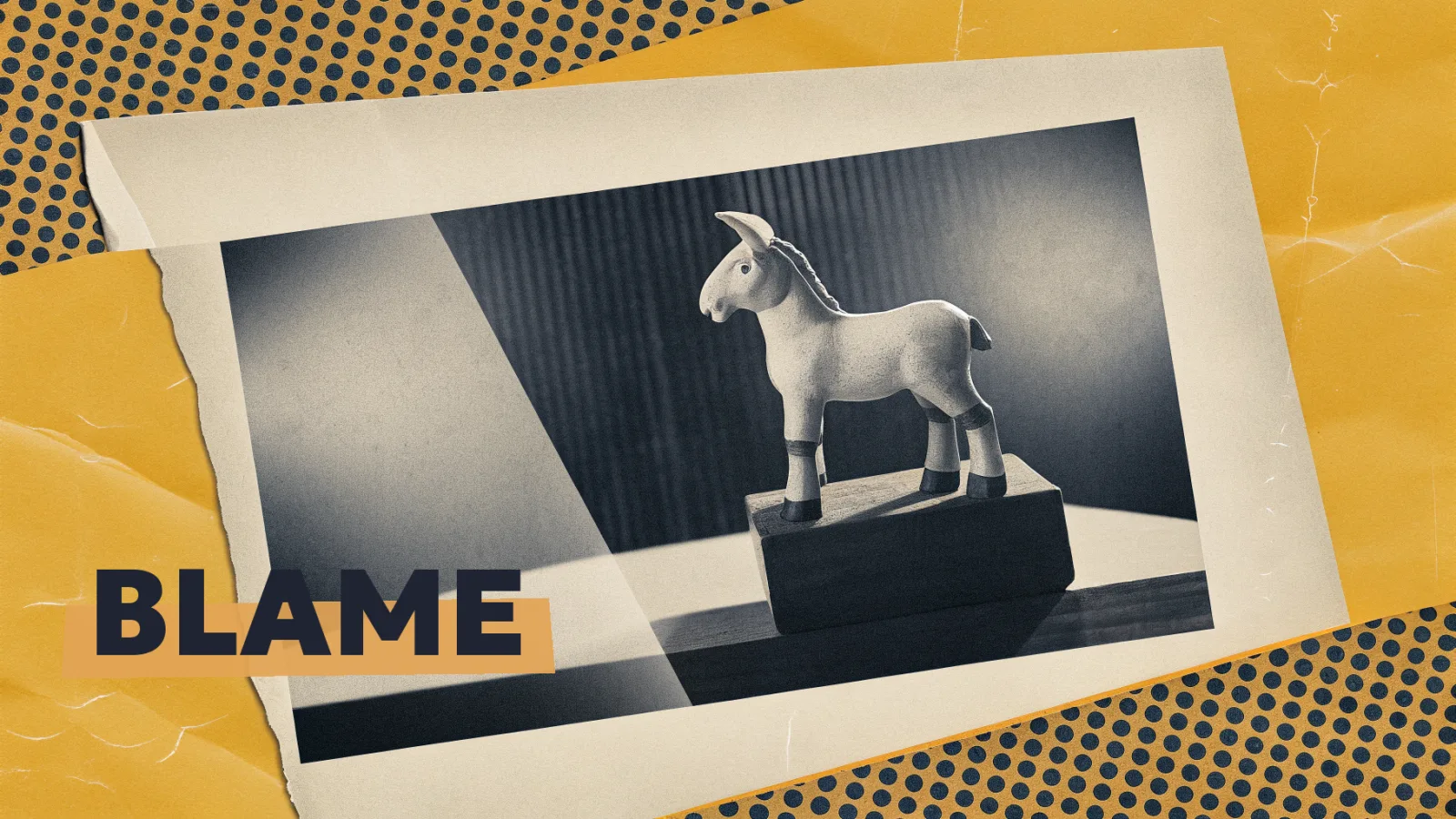
Here's a phrase doing a lot of quiet work in 2026: "the AI did it." It shows up in two places that look unrelated but are the same move, and once you see it you can't unsee it.
The first place is layoffs. AI was cited in 15,341 of the 60,620 US job cuts announced in March — roughly one in four. The catch: a lot of those cuts aren't really about AI. An MIT professor told Fortune that AI has become "a perfect excuse to justify big layoffs… it makes it seem as if it's not our decision, our fault — it's the technology." Even Sam Altman said the quiet part out loud: "almost every company that does layoffs is blaming AI, whether or not it really is about AI." Analysts call it AI-washing: spin a hard, ordinary business decision as unavoidable progress, and dodge the responsibility for having made it.
The same trick, one layer down
That's a leadership story. But the identical move is creeping into how teams run AI agents, and that's the part worth watching. When an agent makes a decision that turns out wrong — denies the claim, sends the email, flags the wrong account — "the agent decided" becomes a very convenient sentence. Nobody chose it. It just happened. The technology did it.
The people who study agent oversight already have a name for this too: accountability laundering — when an error leads to fingerpointing, human responsibility is unclear, and no one is to blame because everyone has plausible deniability. The agent becomes a laundering machine for responsibility: a decision goes in with an owner, and comes out with none. That's not a side effect. For some organizations, it's quietly the appeal.
A machine cannot hold responsibility
Here's the thing both versions are trying to obscure: accountability doesn't actually transfer to the AI, because an AI cannot hold it. It can't be fired, it can't be sued, it can't lose its license, it can't care. When you say "the agent decided," responsibility didn't move to the agent. It just went missing — which in practice means it landed on whoever the decision hurt, instead of whoever made it.
The public seems to grasp this better than the people deploying the systems. 87% of Americans say a human should be required to sign off before AI cuts a job, and 62% say the company that used the AI — not the vendor that built it — should be accountable when it goes wrong. That instinct is correct. The tool didn't decide to deploy itself.
Why this gets worse as agents do more
I've written that agents are headed into rooms where a mistake is a lawsuit — credit, healthcare, hiring. In those rooms, "the agent decided" isn't a shrug, it's a liability with a court date. And the failure modes the oversight researchers describe are exactly the ones that produce it:
- Responsibility abdication — once people get used to the agent being right, they assume it's responsible, and their review becomes a formality.
- The checkbox problem — "human oversight" degrades into clicking approve, not actually judging anything.
- The throughput trap — past a certain volume, a single human "reviewing" thousands of agent decisions can't meaningfully own any of them. The oversight is real on the org chart and fictional in practice.
Each of these is a way the human in the loop becomes a human-shaped alibi — present enough to blame-shift onto the machine, absent enough to not actually be accountable. That's exactly the org-chart problem: a decision needs a named owner, and "the agent" is not a name.
How to not launder accountability
If you're putting an agent on real decisions, the antidote is unglamorous and deliberate:
- Name the human owner of each consequential decision — a person, not a role. If something goes wrong, you should already know whose name is on it.
- Make the review real or admit it isn't. Either the human genuinely has the context and time to overrule the agent, or you're running it autonomously and should own that openly — not hide behind a checkbox.
- Log the decision so it can't go missing. Inputs, the agent's recommendation, who approved it, why. The same audit trail that makes a regulated system defensible is what stops "the agent did it" from being the end of the conversation.
- Say "we decided," not "the AI decided." The language is the tell. If your team reflexively credits the model when a call goes wrong, the accountability has already leaked.
The bottom line
"The AI did it" is comforting because it makes a hard choice feel like weather — something that happened to you rather than something you did. That's exactly why it's dangerous, in the boardroom and in the agent loop alike. The decision to lay people off was a human one. The decision to let an agent deny a claim unsupervised is a human one too. The machine is just where we've learned to point when we'd rather not own the outcome.
Build so the owner is always a person with a name. Not because regulators will make you — though increasingly they will — but because an organization where nobody is responsible for what the agents do isn't automated. It's just unaccountable, and pretending otherwise is the most expensive bug you can ship.
Comments
No comments yet
Sign in to join the conversation.
Be the first to share a thought.